
Riding a motorcycle offers a sense of freedom that few other modes of transportation can match. From coastal highways to winding mountain roads, British Columbia is one of the most scenic places in the world to ride. However, that freedom comes with real risks. Understanding motorcycle safety isn’t just important—it’s essential for protecting yourself and others on the road.
Why Motorcycle Safety Matters
Motorcyclists are vulnerable road users. In British Columbia, motorcycles make up only a small percentage of vehicles, yet they account for a disproportionately high number of serious injuries and fatalities. Riders are significantly more exposed than drivers in passenger vehicles, with no protective frame, airbags, or seatbelts.
In fact, motorcycle riders are more than three times as likely to be injured or killed in a crash compared to occupants of cars. This makes safety awareness, proper training, and protective gear absolutely critical.
Understanding BC Motorcycle Laws
British Columbia has clear laws designed to reduce injuries and fatalities among riders:
Essential Motorcycle Safety Tips
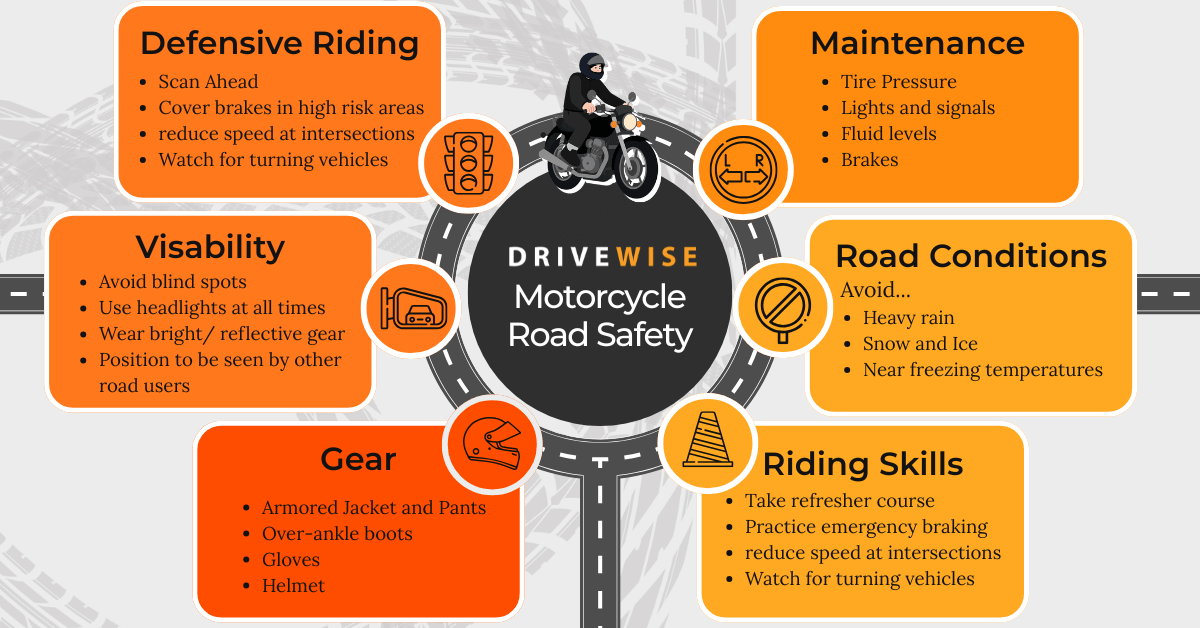
1. Wear the Right Gear Every Ride
Safety gear is your first line of defense. A certified helmet can significantly reduce the risk of fatal head injuries.
In addition to a helmet, riders should wear:
Even short trips require full gear—many serious crashes happen close to home.
2. Be Visible and Stay Out of Blind Spots
Motorcycles are smaller and harder for other drivers to see. Many collisions happen because drivers fail to notice a rider or misjudge their speed.
Never assume a driver has seen you—even if you have the right of way.
3. Practice Defensive Riding
Defensive riding means anticipating potential hazards and reacting early. Intersections are especially dangerous—about 60% of motorcycle crashes in BC occur there.
4. Maintain Your Motorcycle
A well-maintained motorcycle is a safer motorcycle. Before each ride, check:
Mechanical issues can quickly turn into dangerous situations, especially at higher speeds.
5. Adjust for Conditions
British Columbia’s weather and terrain can change quickly. Riders should avoid riding in:
Motorcycles are not required to use winter tires in BC, but riders are expected to use good judgment and stay off the road when conditions are unsafe.
6. Keep Your Skills Sharp
Training and practice make a major difference in crash prevention. Even experienced riders should:
Skill development can be the difference between avoiding a collision and being involved in one.
Sharing the Road: A Shared Responsibility
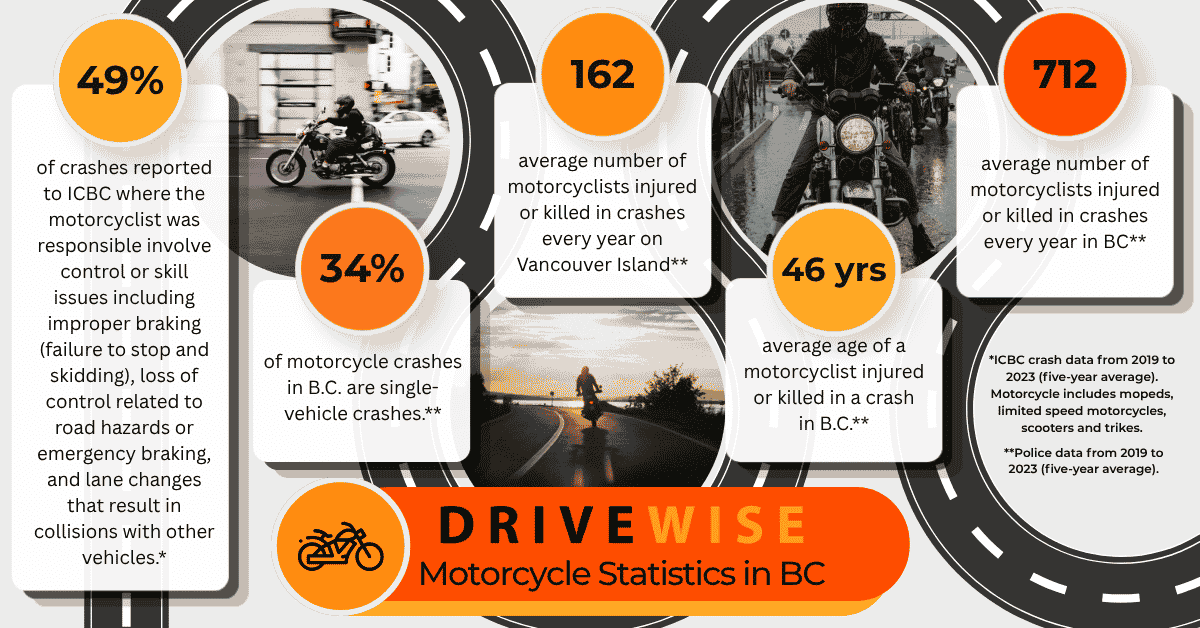
Motorcycle safety isn’t just up to riders—drivers play a major role too. Many crashes involve other vehicles failing to yield, especially at intersections.
Road safety is a shared responsibility, and awareness from all road users saves lives.
Motorcycling in British Columbia can be an incredible experience, but it demands respect, awareness, and preparation. By following the law, wearing proper gear, and practicing defensive riding, motorcyclists can significantly reduce their risk on the road.
Whether you’re a new rider or have years of experience, safety should always come first. Because at the end of the day, the goal isn’t just to enjoy the ride—it’s to make it home safely.